
You are welcome here

You are welcome hereIt was Christmas Day. I was in Kathmandu 10,000 kilometers from home. I knew no one. I didn’t understand the language everyone was speaking around me. The food, the gestures, the smells were all new and strange to me. Yet I clapped along to the songs, in which I understood only one word, with a sense of belonging. The word was Yesu – Jesus. Because of Jesus these strangers were also my brothers and sisters. They welcomed me. They shared their Christmas lunch with me. They invited me back to their homes with warm smiles and enthusiasm.

When you are far from home or feeling alone, when you are feeling abandoned by loved ones, isolated or rejected, a warm welcome by someone, even a stranger can be everything.

Have you ever thought of God as welcoming? The Bible is rich with the theme of God welcoming the sojourner, the outcast, the downcast and the poor. In fact the good news of Jesus Christ is that everyone who trusts Him receives a warm and enthusiastic welcome into God’s eternal kingdom.

You will receive a rich welcome into the eternal kingdom of our Lord and Saviour Jesus Christ” 2 Peter 1:10-11

This kingdom is the most beautiful and wonderful destination you could ever travel to. In fact it is quite literally perfect. In this eternal kingdom there is no loneliness, no divisions, no painful separations, no aging, no hunger, no frustration, no sickness and no tears. You are warmly welcomed regardless of what language you speak, the job you do or do not have, the politics you follow, your age, your diet, your marital status, your music preferences or the number of children you have. The one thing that everyone in this kingdom has in common is faith in Jesus.

So turn to Jesus today, ask for forgiveness for not trusting and loving Him in the past and be warmly welcomed into His perfect kingdom. And for those of us who have already been welcomed by our loving God, remember why we have been welcomed and let us show that same welcome to others.

Prayer: Dear Jesus, Thank you for welcoming sinners like me into your Kingdom. Help me to be welcoming of others as they come to hear the good news of Jesus.

Acknowledgement: This article was sourced from Outreach Media, Sydney, Australia.
Images and text © Outreach Media 2022

Posted in Blog | 1 Comment

The Lord’s Supper is a memorial

Christ the Redeemer monument, Rio de Janeiro, BrazilWe celebrate the Lord’s Supper as a memorial or a remembrance of what Christ did on the cross, but it can be different in some other churches.
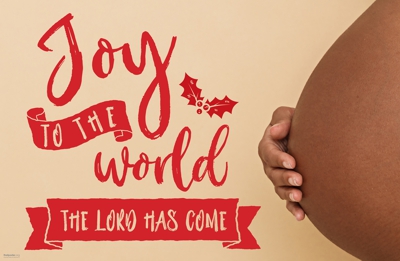
According to the Roman Catholic Church, at the Lord’s Supper the bread and the wine mystically change into the actual body and blood of Christ. However, the outward characteristics of the bread and wine remain unaltered. This miracle is believed to be brought about by the priest’s prayer. After this they believe that the bread and wine are holy and sacred.

The Lord’s Supper is a re-enactment of the Last Supper, the final meal that Jesus Christ shared with His disciples before His arrest, and crucifixion. At the meal, Jesus ate bread and wine and instructed His disciples to do the same in memory of Him. Let’s check the earliest account of the Lord’s Supper.

In 1 Corinthians, Jesus “took bread, and when He had given thanks, He broke it and said, “This is my body, which is for you; do this in remembrance of me.” In the same way, after supper He took the cup, saying, “This cup is the new covenant in my blood; do this, whenever you drink it, in remembrance of me” (1 Cor. 11:23-25NIV).

When Jesus passed around the bread and said “This is my body” did it change into His body? Of course not! His real body was beside them. It was ordinary bread and nothing was mysterious. It was a symbol of the coming death of His body. Or a figure of speech like a metaphor. When Jesus passed around the cup of wine and said “This cup is the new covenant in my blood” did it change into His blood? Of course not! His real blood was inside His real body. It was ordinary wine and nothing was mysterious. It was a symbol of the coming sheding of His blood (death) and the new covenant it instituted. Or a figure of speech like metonymy, where something is described by something else that is associated with it (like cup, wine and blood). His body and blood were present physically as for any human being, not in the bread and wine.

A passage from John where Jesus said, “I am the bread of life”, is used to support the belief that the bread and wine become Christ’s body and blood (Jn. 6:43-59). Jesus told a crowd of Jews, “Very truly I tell you, unless you eat the flesh of the Son of Man and drink His blood, you have no life in you. Whoever eats my flesh and drinks my blood has eternal life, and I will raise them up at the last day” (Jn. 6:53-54). But this is not about the Lord’s Supper because:
– the Lord did not introduce the Lord’s Supper until the end of His ministry one year later.
– In this passage eating and drinking are metaphors for believing in Jesus. Unlike the Lord’s Supper, this eating and drinking gives eternal life.

At the Reformation, protestants rejected the idea of consuming Christ’s body and blood at the Lord’s Supper. Christ’s sacrifice doesn’t need to be repeated in this way– it was “once for all” (Heb. 10:10).

Jesus doesn’t have a gravestone or a monument, the Lord’s Supper is how we can remember Him. The bread and wine are a memorial and they don’t become Jesus. This is a time to remember and reflect on what Christ has done through His death. The bread and the cup of wine help us to remember that Christ’s body was broken for us and His blood was shed for us.

Prayer

Lord, thanks for giving us a way to remember your substitutionary death on the cross for the sins of the world. The bread reminds us of your body which suffered when it was given for us. And the wine reminds us of the blood shed at your crucifixion. We offer thanks and praise for your sacrifice as we share the emblems together.

G Hawke

Posted in Blog | Tagged , , , , , , | Leave a comment

Joy to the world, the Lord has come

Joy to the world, the Lord has comeIf Jesus’ birth was the advent of joy for all people, where is this joy? None of us have to search hard to find life is still riddled with hurt, sickness, resentment, rejection, violence, broken relationships… You could keep the list going I’m sure.
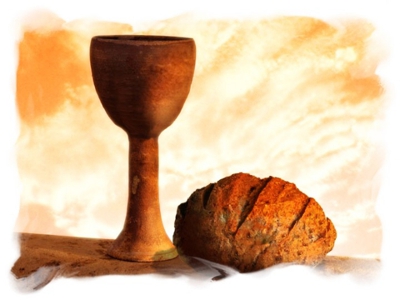
The birth of Jesus doesn’t seem to have made much difference to the suffering of this world. Where is joy to the world?

Isn’t that what was promised over 2000 years ago when an angel shone before stunned shepherds and declared, “I bring you [the shepherds] good news that will cause great joy for all the people. Today in the town of David a Saviour has been born to you; He is the Messiah, the Lord” (Luke 2:10-11).

The answer to “where is the joy Jesus was said to bring?” is quiet and deep and life changing.

The joy Jesus offers us is the joy of knowing God is with us amidst the suffering of life. When Jesus was born God Himself came into the world. In fact one of the names Jesus is given, Immanuel, means “God with us” (Matthew 1:23). As Jesus, God laughed and loved, hungered and hurt like we do. To know God truly understands the difficulties and disappointments of life is a great comfort.

The joy Jesus offers us is also the joy of knowing we are deeply loved by God. As we see Jesus heal and show compassion to the hurting and hopeless we see the kindness and care of God. As we see Jesus, the Saviour, willing to suffer and die on the cross to pay for our wrongs, we see the depth of God’s self-sacrificing love for us. To know we are relentlessly loved even though we do wrong; to know we can be forgiven for anything because of Jesus, is a joy that runs deep and strong beneath daily trouble.

The joy Jesus offers us is also the joy of a certain hope – an anchor in the storm. Jesus promised He will return to this world and make everything the way it should be (Matthew 19:28-29). The perfect life we all want — no crying, no sickness, no frustration or pain — a forever life full of joy and love really is possible and will one day happen because of Jesus (Revelation 21:1-4). Jesus came and sacrificed Himself to make it possible.

Joy to the world the Lord has come!

Prayer: Thank you for coming to rescue me from the sin and brokenness in me and in the world. May my heart rejoice in this great news that you are with me, you love me and one day you will make everything perfect.

Acknowledgement: This article was sourced from Outreach Media, Sydney, Australia.
Images and text © Outreach Media 2021

Posted in Blog | Tagged | 1 Comment

Synonyms of the Lord’s Supper

The Lord’s Supper is described in the Bible in the synoptic gospels (Matthew, Mark and Luke) and the books of Acts and 1 Corinthians. These were all written between about AD 45 and AD 63. Where do the synonyms we use for the Lord’s Supper come from?
At the last Passover before Jesus died (about AD 30), He told His disciples to eat the bread and drink the cup of wine “in remembrance of me” (Lk. 22:19). Although there is no name for the Lord’s Supper in these gospels, some people call it “the Remembrance Service” or “the Memorial service”.

But where does the term “the Lord’s Supper” come from?

The Lord’s Supper

The best explanation of the Lord’s Supper is given in 1 Corinthians 11:17-34. In this passage, Paul calls it “the Lord’s Supper” (v.20). The Greek noun “deipnon” (Strongs #1173) translated “supper” means the evening meal which we would call “dinner”. This term may have been used to distinguish it from the fellowship meal that it was initially associated with.

In this case Paul was critical of the Corinthians because the Lord’s Supper was the remembrance of a selfless act, and they were acting very selfishly. At the Lord’s Supper we should also be reminded that our behaviour should be consistent with that of the Lord.

So sometimes in the Bible, it’s called “the Lord’s Supper”. But where does the term “the breaking of bread” come from?

The breaking of bread

The phrase “breaking of bread” is used in the New Testament to refer both to the Lord’s Supper and to eating an ordinary meal. The meaning in a particular case should be determined from the context. In Greek this term meant to divide bread, cakes or loaves into pieces.

Acts 2:42 says that the early Christians “devoted themselves to … the breaking of bread”. And Paul stayed in Troas for seven days in order to break bread on the first day of the week (Acts 20:7, 11).

So, the main terms used in the Bible are “the Lord’s Supper” and “the breaking of bread”. But where does the term “Communion” come from?

Communion

The Lord’s Supper is also described in chapter 1 Corinthians 10, “The cup of blessing which we bless, is it not the communion of the blood of Christ? The bread which we break, is it not the communion of the body of Christ?” (1 Cor. 10:16 KJV, NKJV).

The word “communion” comes from the King James Bible. The Greek noun koinonia (Strongs #2842) means partnership, participation, sharing in, communion, and spiritual fellowship. Other translations use, “sharing” (CSB, NASB, NET, NIRV, NLT) or “participation” (ESV, NIV) instead of “communion”.

The Lord’s Supper is a symbol of our fellowship with the Lord. We receive the benefits of Christ’s death. A believer must be in fellowship with the Lord before partaking. The only person who can prepare you for the Lord’s supper or communion is yourself.

So sometimes people call the Lord’s Supper “Communion”. But where does the term “the Eucharist” come from?

The Eucharist

Each of the gospel accounts says that Jesus “gave thanks” during the Lord’s Supper (Mt. 26:27; Mk. 14:23; Lk. 22:19). And so does Paul (1 Cor. 11:24). Jesus gave thanks in prayer by thanking God for saving sinners through His death. The Greek verb eucharuisteo (Strongs #2168) means to be thankful. So sometimes people call the Lord’s Supper “the Eucharist”.

Summary

The Lord’s Supper, the breaking of bread, Communion, the Eucharist, the Remembrance Service, and the Memorial Service are synonyms.

Prayer

Lord, we thank you for giving us a special way to remember what you have done for us in the Lord’s Supper, the breaking of Bread, Communion and the Eucharist. We remember your sacrificial death like that of the Passover lamb. Just as we depend on food and drink to live physically by eating and drinking, we can only live spiritually through your death and resurrection. This enables us to share in all the benefits of eternal life. And we offer thanks and praise for all that you have done.

G Hawke

Posted in Blog | Tagged , , , , , , | Leave a comment

The original context of the Lord’s Supper

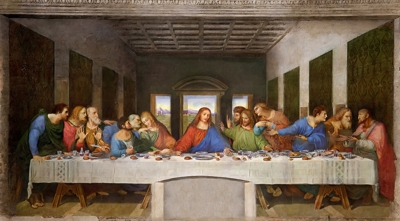
"The last supper" by Leonardo Di Vinci in 1498 Paul described the Lord’s Supper as follows, “For I received from the Lord what I also passed on to you: The Lord Jesus, on the night He was betrayed, took bread, and when He had given thanks, He broke it and said, ‘This is my body, which is for you; do this in remembrance of me.’ In the same way, after supper He took the cup, saying, ‘This cup is the new covenant in my blood; do this, whenever you drink it, in remembrance of me.’ For whenever you eat this bread and drink this cup, you proclaim the Lord’s death until He comes” (1 Cor. 11:23-26NIV).
The original context is Jewish – Jesus and His disciples were Jews. Jews living under the old covenant were gathered in Jerusalem to celebrate the Passover Festival. This was the last Passover under the old covenant. Jesus gave the command to His disciples during the Passover meal, a few hours before He was arrested, trialed and crucified (Mt. 26:26-30; Mk. 14:22-26; Lk. 22:19-20; 1 Cor. 11:23-26). Jesus told His disciples, “I have eagerly desired to eat this Passover with you before I suffer. For I tell you, I will not eat it again until it finds fulfillment in the kingdom of God” (Lk. 22:15-16). The last supper was a Passover meal. What the Passover was to the Israelites, the Lord’s Supper is for Christians of all nations. The Israelites looked back to God liberating them from slavery in Egypt via the sacrifice of the Passover lamb. Likewise, Christians look back to God liberating them from the penalty of sin through the sacrifice of Christ to have eternal life with God. Paul linked the two when he said, “Christ, our Passover lamb, has been sacrificed” (1 Cor. 5:7).

At the last Passover Jesus looked ahead to the kingdom of God (Lk. 22:18). He said that He would not partake in a Passover again until His millennial reign (Lk. 22:15-18). The victory that began with the first Passover in Egypt and was remembered whenever the Jewish Passover festival was celebrated will be ultimately finalized when Christ’s millennial kingdom is established on earth. The rescue mission that began with the Passover, which was a foretaste of Christ’s death, will be completed and evident to the universe at the second advent of Christ and in His subsequent kingdom. Likewise, Christians can also look ahead, Paul said, “For whenever you eat this bread and drink this cup, you proclaim the Lord’s death until he comes” (1 Cor. 11:26). So, we look forward to the rapture when there will be no need for the Lord’s Supper because all Christians will be with the Lord. And Christ’s victory over Satan will not be complete until Satan’s forces are defeated at the triumphant second advent (Rev. 19:11-21).

So, at the Lord’s Supper believers today look back to the Lord’s death and ahead to His coming again (1 Cor. 11:23-26).

How does the Lord’s Supper apply to us today? The church began 50 days after Christ’s resurrection. The command was given to the disciples who were the leaders in the early church, which was mainly Jewish. But they were commanded to spread the gospel across the world (Acts 1:8). And today there are churches in all countries of the world. So, the command that was given to Jews now applies to all of the Christian churches across the world.

The Passover was an annual event, but the Lord’s Supper seems to have been originally an event whenever Christians met together, which settled down to be a weekly event (Acts 20:7).

The bread and the wine in the Lord’s Supper are symbols of Christ’s incarnation (He came in a human body) and His sacrificial death. They represent His person and His work. The bread represents His body. And the cup of wine represents Christ’s death. At the Lord’s Supper believers recall His suffering and the blessings and benefits which come from His death and resurrection, and they offer thanks and praise for all that God has done for them through Jesus Christ.

Prayer

Lord Jesus we recall your command to the disciples to remember you in the Lord’s Supper. And like the first Lord’s Supper, we look back and ahead. Back to your sacrificial death that took the penalty for our sin and the sin of all mankind. And ahead to being with you, and your final victory over Satan. Thanks for your new covenant of eternal spiritual life and your spiritual blessings now and forever more. For all that you have done, continue to do, and promise to do, we offer thanks and praise.

G Hawke

Posted in Blog | Leave a comment

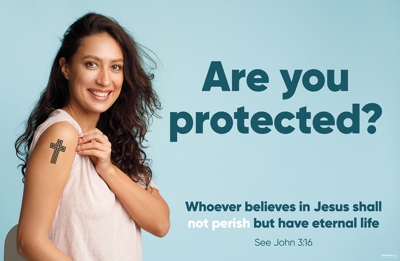
Are you protected?

Are you protected?The older I get the more I understand how fragile human life really is. The COVID-19 pandemic is just one example of how something seemingly small can change the lives of the entire world’s population. As advanced, intelligent and resilient as humanity is, life can be lost in the blink of an eye. For this reason we spend a lot of effort trying to protect ourselves and our loved ones… from buckling the back-arching, screaming toddler into her seatbelt, to spending hard earned cash on insurance policies, to getting the COVID jab.
But have you ever thought about your spiritual protection? The Bible tells us that our greatest need and our greatest danger is a spiritual one. Sin may not always seem dangerous – a lie here, a little lust there – but God’s word declares that sin causes death (see Genesis 2:17 and Romans 6:23). The death that sin leads to is not usually immediate but it is always eternal. By ignoring, rejecting or forgetting God we cut ourselves off from the source of eternal life. How can we protect ourselves from this eternal danger? A little like the COVID-19 vaccination, our eternal protection comes from something we receive. It has been prepared for us, we must simply believe in it and receive it.

Whoever believes in Jesus shall not perish but have eternal life” John 3:16.

Unlike a COVID vaccine, the protection offered to us in Jesus does not wane. Jesus’ death and resurrection on our behalf, when we believe and receive it, has a 100% efficacy rate to protect us from the deadly consequences of our sin for all of eternity (no boosters required).

Have you received this free and eternal protection through Jesus?

Prayer: Dear God, I confess the sin in my life leads to death. I believe Jesus’ death and resurrection on my behalf means I now have protection from the eternal consequences of my sin and receive eternal life instead.

Acknowledgement: This article was sourced from Outreach Media, Sydney, Australia.
Images and text © Outreach Media 2021

Posted in Blog | Leave a comment

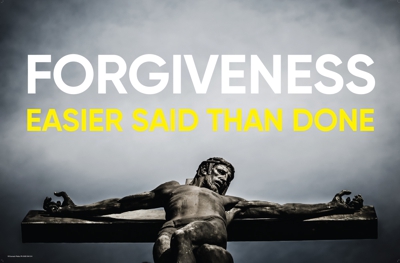
Forgiveness – Easier said than done

Forgiveness - Easier said than doneForgiveness is hard. It is painful. It can be slow and gruelling. Yet there are no relationships in which forgiveness is not necessary.

The forgiveness the Bible speaks of is not turning a blind eye to the wrong committed against you, it is not pretending you are OK, it is not convincing yourself you deserved it or that the wrong doing wasn’t that big a deal. On the contrary, biblical forgiveness looks the offense in the eye, names it for what it is, acknowledges all its painful consequences, weeps over what has been done and lost, and in so doing says, “I love you still.”

If you are struggling to forgive someone you love, look to Jesus. He is not only the perfect example of the painful path of forgiveness, He is the one we need to be forgiven by.

In Matthew 26:28 Jesus, knowing He was soon to be nailed to a wooden cross, explains His willing sacrifice for the sake of others, “this is my blood [symbol of death], which confirms the covenant between God and His people. It is poured out as a sacrifice to forgive the sins of many.

For Jesus, forgiveness means choosing a cruel undeserved death for the sake of the beloved wrong doer.

Jesus looks our sin in the eye, our disobedience, distrust, and disrespect for God, and says, “I’m not going to let this come between us.” He would rather absorb the horrific consequences of our sin Himself than be separated from us forever. On the cross we see how costly forgiveness is and how much we all need it.

Have you asked God to forgive you? He is willing and waiting.

Bible verse: Matthew 26:28 this is my [Jesus’] blood [symbol of death], which confirms the covenant between God and His people. It is poured out as a sacrifice to forgive the sins of many”.

Prayer: Dear God, Please forgive me. Please help me to see the great price you paid to bring me forgiveness. Please help me in the painful task of forgiving others.

Acknowledgement: This article was sourced from Outreach Media, Sydney, Australia.
Images and text © Outreach Media 2021

Posted in Blog | Tagged , , , , | Leave a comment

Christian martyrs

World Watch List 2021: the 50 countries where it is most dangerous to be a Christian. The top 5 are North Korea, Afghanistan, Somalia, Libya and Pakistan.Millions of Christians are persecuted across the world today. Pastors are imprisoned or killed for proclaiming the gospel. Young people flee for their lives when their families discover they have converted to Christianity. Believers are beaten, tortured, pursued. They are falsely accused, threatened, abused, starved, maimed and harassed. Their homes and churches are burnt down, their Bibles confiscated, and their businesses destroyed. They are expelled from school, fired from their jobs and forced to meet in secret.
History and tradition say that the apostles (except for John) had violent deaths. Only two are mentioned in the Bible – Judas betrayed Jesus and hanged himself, while James the son of Zebedee was beheaded by king Herod (Mt. 10:2; Acts 12:2). But it gives some details of the first Christian martyr (Stephen).

Jesus Christ and Stephen are two significant characters in the Bible. They have many similarities and some differences. Stephen lived in Jerusalem and was an active member of the early church who was godly and wise (Acts 6:3,5).

Some examples of the similarities of the two are as follows:
– Both preached to the Jews and performed miracles (Acts 6:8).
– Both influenced people; Jesus trained the apostles and Stephen’s testimony would have influenced Paul (Acts 22:20).
– Both were opposed by some of the Jews (Acts 6:9-10).
– Both were trialed in front of the Sanhedrin – the highest Jewish court of law (Mt. 26:59; Acts 6:12).
– Both were questioned by the Jewish high priest (Mt. 26:62-63; Acts 7:1).
– Both were accused of blasphemy – speaking against God (Mt. 26:65; Acts 6:11). Blaspheme is the opposite of praise.
– Both had false witnesses testify against them (Mt. 26:59-60; Acts 6:13).
– Both spoke on the destruction of the temple (Mt 26:61; Acts 6:14).
– Both spoke of the Son of man at the right hand of God (Mt. 26:64; Acts 7:56).
– Both faced their trial and death with boldness.
– Both were killed (martyred) outside the city (Heb. 13:12; Acts 7:58). Stephen probably died at Calvary. That’s where criminals were executed.
– Both forgave the sins of the persecutors and prayed for them (Lk. 23:34; Acts 7:60).
– And both called out, “Lord, receive my spirit.” (Lk. 23:46; Acts 7:59).

Some examples of the differences of the two are as follows:
– Jesus was crucified, whereas Stephen was stoned.
– Jesus prayed to God the Father, whereas Stephen prayed to Jesus Christ (Lk. 23:46; Acts 7:59-60).
– Stephen died because of the action of cruel men, whereas Jesus gave Himself up to die as a sacrifice for our sins.
– Christ’s death was followed by the start of the church due to the giving of the Holy Spirit; and Stephen’s death was followed by the spread of the church due to persecution (Acts 1:4-5; 8:1, 4; 11:19-21).
– Stephen’s body is still waiting to be resurrected, whereas Christ’s body was resurrected back to life on the third day after He died.
– And Stephen was a human being like us, whereas Jesus is the unique Son of God who is both human and divine. This is the difference that counts. Jesus was not an ordinary man.

The main point is that we can admire great Christians like Stephen or Paul, but like us they are just servants of Jesus Christ. On the other hand, Jesus is unique and on the cross He took the penalty for our sin.

Prayer

Our God and Father, we thank you for raising up men of great faith like Stephen. But most of all we thank you for Jesus Christ who was their Savior and is our Savior as well. We acknowledge that our sin separates us from yourself. We thank you for addressing that sin by sending Jesus to die in our place – to be our substitute as a vicarious sacrifice. Amen

G Hawke

Posted in Blog | Tagged , , , , , | Leave a comment

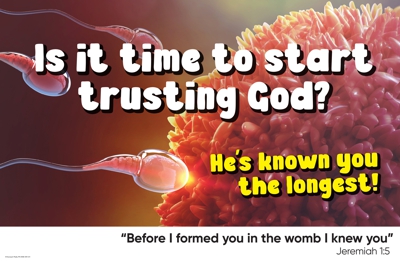
Is it time to start trusting God?

Is it time to start trusting God?He’s known you the longest!

Something bizarre was happening inside me. While I ate and slept and talked and went about life as usual, a tiny human was forming in my womb. A minuscule heart, tiny fingers, spec sized toenails, teeny lips were taking shape. I wasn’t directing what was happening. I didn’t make any conscious effort — “OK today we’re going to separate the left and right chambers of the heart … today we’re going to form eyelids.” The only way I knew what was happening inside me was by reading about it. I felt wonder at this most ordinary miracle taking place within my body. I felt humbled at how little control I had over this most significant life event.

I [God] knew you before I formed you in your mother’s wombJeremiah 1:5

Before I got to see my firstborn baby, before I knew he was a boy with dark hair, olive skin and a birthmark on his back, God knew him. The same is true for you. Even before your mother knew you, God knew you. He’s known you longer than anyone. He’s been there and seen it all. Your growth from a microscopic cell, your first steps, your fear of the dark, your excitement at Christmas, your sicknesses, your heartbreaks, your crushing disappointments. He’s known you and He’s loved you and He wants you to trust him.

I know it can be really hard to trust someone you can’t see. God knows that too. That’s part of the reason He came down to us in human form. When we see Jesus in the pages of the Bible we see God. We see He cares for the sick, feeds the hungry, feels compassion, forgives sinners, loves the outcast, hates corruption, keeps His promises … He is someone we can trust.

Why not pick up one of the biographies of Jesus in the Bible and get to know the God who has always known you?

Bible verse: Jeremiah 1:5 I [God] knew you before I formed you in your mother’s womb”.

Prayer: Dear God, Open our eyes and hearts to know you as the all knowing, trustworthy God we see in Jesus.

Acknowledgement: This article was sourced from Outreach Media, Sydney, Australia.
Images and text © Outreach Media 2021

Posted in Blog | Tagged | Leave a comment

Prayer during lockdown

Premier of NSW Gladys Berejiklian at daily 11am COVID-19 press conference We’re all going through a tough time with this lockdown. Parents will be home schooling for two more months. Travel is restricted. Our grandchildren on the central coast seem to be as far away as those in France. There are extra restrictions. People are isolated, which can increase anxiety, fear and depression. People are working from home. Many businesses must be struggling to survive with reduced cash flow. There is reduced family income. Some are unemployed. There is a reduction in some health services. But our needs are increased because of the stress. No visitors are allowed in hospitals and nursing homes. Other services are reduced. Churches can’t meet as usual. And households are spending extended time together without relief. It’s a bit like 1984 with government surveillance and propaganda. How do we get through such tough times? Is social media the answer? Can prayer help us trust God in times like this?

When Saul tied to kill David over an extended period of time, David prayed, and God protected him. Some of his prayers are in the book of Psalms. Nehemiah prayed – it’s mentioned in 8 verses in the book of Nehemiah. When Paul and Silas were imprisoned for preaching in Philippi, they were “praying and singing hymns to God” at midnight (Acts 16:25).

It’s clear in the Bible that God’s people pray. It’s mentioned in 367 verses in the NIV Bible (316 in ESV, 357 in CSB, 408 in NET, and 436 in NLT). And prayer is mentioned in 54 verses in Paul’s letters.

Why do we pray? Because it is commanded in the Bible. And Jesus and the apostles modelled prayer – they prayed regularly. There are five passages where Paul commanded Christians to pray.

Prayer commanded

  1. When Paul wrote to a young church that was being persecuted, he commanded them to fix their attitudes, “Rejoice always, pray without ceasing, give thanks in all circumstances; for this is the will of God in Christ Jesus for you” (1 Th. 5:17ESV). Or “Pray constantly” (CSB, NET). Or “Pray continually” (NIV). Or “Never stop praying” (NLT). It means, don’t give up praying. Always be willing and ready to pray. Pray regularly. Be persistent in prayer. Cultivate a sense of dependence on God.
  2. When he wrote about the behavior of Christians in the church, Paul commanded them, “Be joyful in hope, patient in affliction, faithful in prayer” (Rom. 12:12NIV). Or “be persistent in prayer” (CSB, NET). Or “Be constant in prayer” (ESV). Or “keep on praying” (NLT). Persevere in prayer. An effort is required to maintain the habit of prayer.
  3. When describing a Christian’s weapons for spiritual warfare, Paul commanded, “And pray in the Spirit on all occasions with all kinds of prayers and requests. With this in mind, be alert and always keep on praying for all the Lord’s people. Pray also for me, that whenever I speak, words may be given me so that I will fearlessly make known the mystery of the gospel, for which I am an ambassador in chains. Pray that I may declare it fearlessly, as I should” (Eph. 6:18-20). Part of the armor of God in the spiritual battle is to pray with the help of the Holy Spirit. We need to pray when we are in a spiritual war. And pray for spiritual problems more than for physical ones. While Paul is in gaol for preaching the gospel, he asks for prayer to keep on preaching the gospel!
  4. When Paul addresses the everyday life of a Christian (their family, work, and witness), he includes their prayer life: “Devote yourselves to prayer, being watchful and thankful. And pray for us, too, that God may open a door for our message, so that we may proclaim the mystery of Christ, for which I am in chains. Pray that I may proclaim it clearly, as I should” (Col. 4:2-4). Be devoted to prayer like a tax collector is devoted to collecting taxes (Rom. 13:6). Be alert to the importance of prayer. Be grateful and thankful when we pray. Thank God for His providential care. While Paul is in gaol for preaching the gospel, he asks for prayer for God to open up opportunities to preach the gospel again!
  5. When Paul addresses how to deal with broken relationships, he includes, “Do not be anxious about anything, but in everything by prayer and supplication with thanksgiving let your requests be made known to God. And the peace of God, which surpasses all understanding, will guard your hearts and your minds in Christ Jesus” (Phil. 4:6-7ESV). Place the situation in God’s hands. Trust in His sovereignty. We can pray about anything. Once again, it’s with thanksgiving. Prayer is the way to alleviate worry. If we have given our problem to the Lord, we can have peace.

Discussion

Tough times are a test of our Christian faith. They are part of our spiritual battle. Prayer is one of the ways to get through difficult times. There are five principles about prayer in the passages we read from Paul:
– Always be ready to pray (in any time, and any situation).
– Don’t give up on prayer (that’s giving up on God).
– Hand your problems and worries to God in prayer (that’s sharing your concerns).
– Be grateful and thankful when we pray (remember all that God does for us).
– Pray for the spread of the gospel message (that’s the only lasting hope).

These are commands or imperatives. Prayer is not optional. Christians are commanded to pray. They are some of the commands given to Christians in the New Testament. The Israelites were given commands in the Old Testament, which was the law of Moses. They flourished when they obeyed, like when under Joshua they captured and settled in Canaan. But they suffered when they disobeyed, like when they were invaded and taken into exile by the Assyrians and the Babylonians.

Giving up on praying would be like not speaking to your spouse or others in your household. And if it was ongoing, it would be like being divorced or being estranged from your best friend. Or like having a permanent strict COVID lockdown.

So the Bible commands us to pray. God commands us to pray. Prayer taps into the power of God. It maintains our relationship with God. Prayer is an act of dependence on God for whatever we might be facing.

Summary

Prayer is mandatory for believers. In difficult times like lockdowns we should bring our needs to God in prayer. It is important to realize our dependence on God and express it through prayer. Only those who see the big picture, that God is at work even in our trying times, can suffer gladly (Rom. 5:3). Let’s start praying today!

G Hawke

Link to extended article on this topic: Why pray in trials and difficult times?

Posted in Blog | Tagged , , , , | Leave a comment