There are many prophecies about Jesus in the Old Testament. For example, Isaiah said that honour and “a great light” would come to the region of Galilee. Galilee was part of the northern region of Israel. In Old Testament times, Israel was mainly invaded from the north because there was desert on the east and south and the Mediterranean Sea on the west. So, Galilee was targeted in many enemy attacks.
The book of Isaiah contains the prophet’s message to Judah. They faced judgement because of their idolatry and rebellion against God. The Assyrians were to inflict judgment on Israel and Judah. It’s a gloomy situation because the land will be devastated.
But then Isaiah says, “Nevertheless, there will be no more gloom for those who were in distress. In the past he [God] humbled the land of Zebulun and the land of Naphtali [Galilee], but in the future, he will honour Galilee of the nations, by the Way of the Sea, beyond the Jordan—The people walking in darkness have seen a great light; on those living in the land of deep darkness a light has dawned” (Isa. 9:1-2NIV).
So Galilee would change from a place of humility and darkness to a place of honour and light.
In 733BC, the Assyrians captured Galilee and deported many Israelites to Assyria (2 Ki. 15:29; 17:6, 23) and replaced them with Gentiles (2 Ki. 17:24). So, the prophecy of judgment of a nation in the spiritual darkness of idolatry was fulfilled. That’s when they were humbled.
Matthew quoted the passage from Isaiah 9,
‘12 When Jesus heard that John had been put in prison, He withdrew to Galilee.
13 Leaving Nazareth, He went and lived in Capernaum, which was by the lake in the area of Zebulun and Naphtali— 14 to fulfill what was said through the prophet Isaiah: 15 “Land of Zebulun and land of Naphtali, the Way of the Sea, beyond the Jordan, Galilee of the Gentiles—16 the people living in darkness have seen a great light; on those living in the land of the shadow of death a light has dawned.” (Mt. 4:12-16).
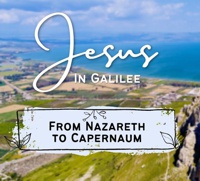
Jesus Christ is the “great light” that brought honour to Galilee. This happened at least 760 years after Isaiah’s prophecy. Jesus was based in Capernaum, which was on the northwest shore of the Sea of Galilee. 11 of the 12 disciples were from Galilee. At the time of Jesus, Galilee was a mix of Jews and Gentiles that was despised by the Jews of Judea. Christ’s ministry was predominately amongst the common people in Galilee rather than the amongst community leaders (political, religious and academic) in Jerusalem. He was Jesus of Nazareth, not Jesus of Jerusalem. Christ’s focus on Galilee shows that Christianity flourishes more amongst the common people than the elite.
Galilee was transformed from spiritual darkness to spiritual light by Jesus. Galilee had been devastated by the Assyrian army, but it was honoured by the ministry of the Messiah which brought joy and salvation. Although the world is a dark place spiritually, the good news about Jesus brings spiritual light.
Jesus said, “I am the light of the world. Whoever follows me will never walk in darkness, but will have the light of life” (Jn. 8:12). And the Bible says, “God is light” (1 Jn.1:5). So, Jesus is the divine Son of God. Light represents what is good, true and holy, while darkness represents what is evil and false (Jn. 3:19-21). There was spiritual darkness in the world in the time of Isaiah, and in the time of Jesus and today.
Prayer
Father God, we thank you for your prophecy about Galilee. Although they were living in spiritual darkness, you sent Jesus to transform them through the light of His presence and message.
And we thank you that since that time this transformation has been available to people across the world through the good news about Jesus. We recognize that Jesus is the only one who can reconcile us with God through the forgiveness of our sin. So, we offer thanks and praise for all that you have done through Jesus. In Christ’s name, Amen.
G Hawke